

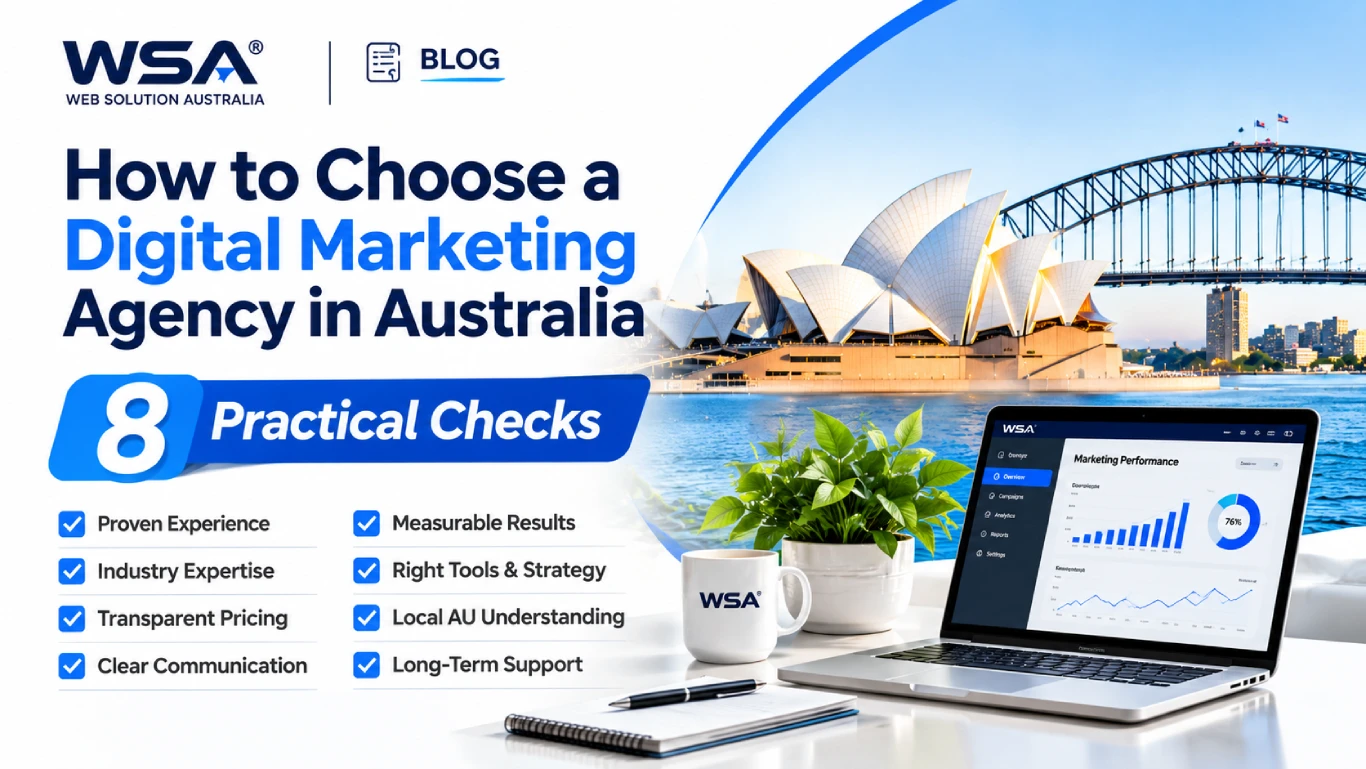
Choosing a digital marketing agency is not simply a matter of comparing service lists or choosing the proposal with the biggest numbers.
The right partner should understand how your business earns revenue, identify what is limiting growth and explain how its work will be measured.
For an Australian business, that also means understanding your customers, service locations, sales process and operating requirements.
Use these checks to assess an agency's strategy, evidence, measurement, account ownership, team and commercial terms before signing.
1. Define the business outcome before discussing channels
Start with the result you need : qualified quote requests, booked consultations, profitable online orders or a stronger B2B pipeline. “More leads” is not precise unless you define a good lead.
A duplicate enquiry or a customer outside your service area can raise lead numbers without improving revenue.
Give each agency the same short brief : your priority services, customer groups, locations, average order or contract value, sales cycle, current marketing activity and the outcome you want to measure. The agency should ask about these details before recommending SEO, Google Ads, paid social or a website rebuild.
2. Check its understanding of the Australian market
Adding “Australia” to a generic campaign plan is not local expertise. Ask how the agency will research your city, region or national market, identify competitors and understand how customers search and buy.
The work will differ by business model. A local service provider may need suburb-level search targeting, realistic service boundaries and call tracking. An e-commerce business may need product-feed, checkout and retention improvements.
A B2B firm may need account-based targeting, lead qualification and CRM reporting.
A local office is not proof of capability. A remote agency can work if it understands Australia, agrees AEST/AEDT overlap and identifies who will deliver the work.
3. Verify case studies, not just headline results
A credible case study explains the starting position, work completed, measurement period and result attributable to the work. Ask for examples from businesses with a similar model, audience or sales cycle.
Check the baseline and dates, the agency's actual role, the data source and any other changes made by the client.
For lead generation, look beyond form submissions to qualified enquiries and sales progression.
For e-commerce, examine revenue alongside new-customer acquisition and margin. For B2B, ask how marketing contributed to accepted leads and pipeline.
A large percentage increase without context is difficult to assess. Claims about results and testimonials should be accurate and supported; see the ACCC's guidance on advertising claims.
4. Look for diagnosis, not a long list of services
A full-service agency is not automatically the right agency. You need the capabilities that match the problem.
Ask why each channel is recommended. SEO can build search visibility over time; paid search can test high-intent demand but depends on competition, budget and landing-page quality. Paid social may create demand or support retargeting.
Website development and conversion-rate optimisation matter when visitors cannot understand the offer or complete an enquiry.
Ask what the agency would investigate first, prioritise and postpone. Fixing a broken enquiry path may be more valuable than increasing ad spend. Improving sales follow-up may matter more than buying additional traffic.
For SEO proposals, review Google's guidance on hiring an SEO. Google warns against guaranteed rankings and providers that will not explain their work.
5. Make reporting connect marketing to business performance
A report should help you make decisions, not just display impressions, clicks and screenshots. Agree on a baseline and a small set of measures before launch.
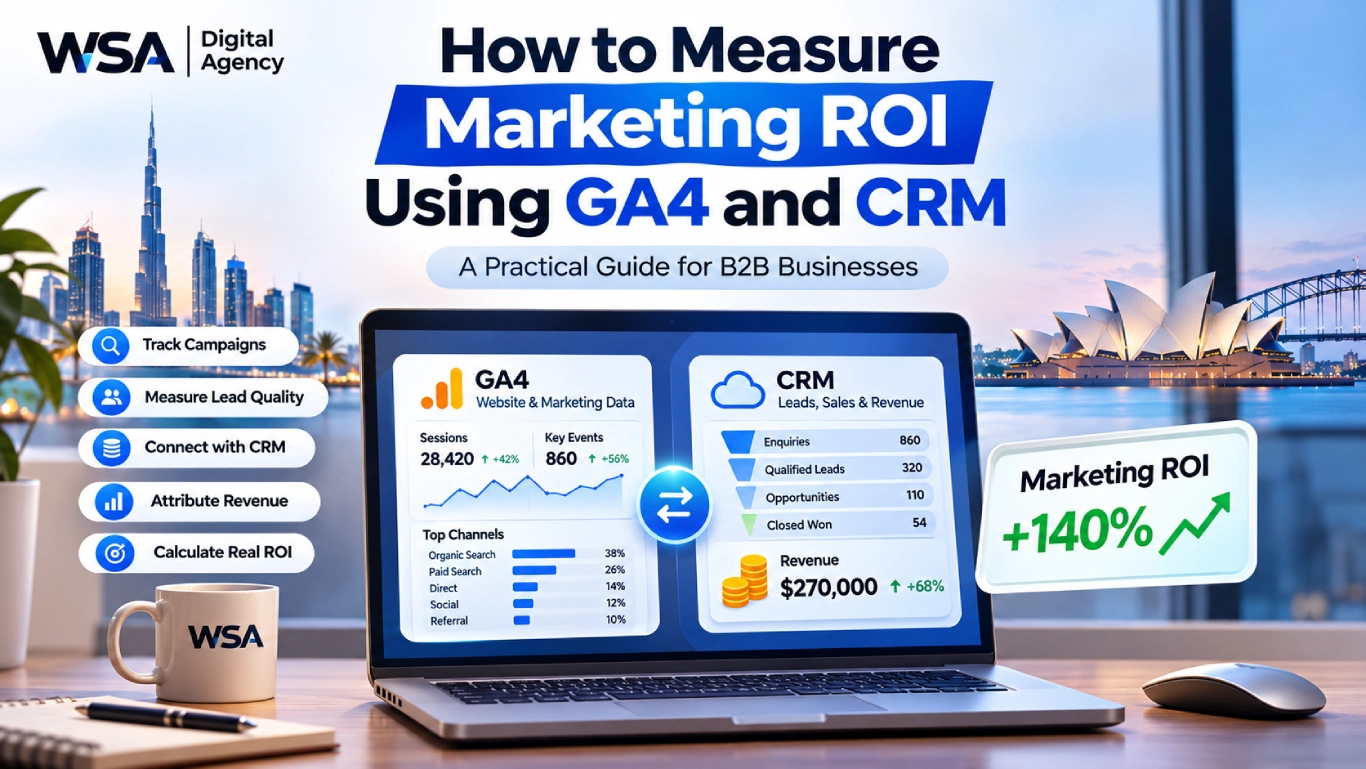
Ask how the agency defines a conversion, handles duplicate or spam enquiries, tracks calls and connects leads to your CRM.
Clarify attribution limits : a platform-reported conversion does not automatically prove an incremental sale.
Your team should have access to the underlying data, not only a monthly PDF. Google Search Console provides first-party information about how your site performs in Google Search.
6. Keep control of accounts and marketing assets
List the systems involved : domain, hosting, website CMS, GA4, Google Tag Manager, Search Console, Google Ads, Meta Business Portfolio, CRM and creative files.
Your organisation should retain administrative access and clear rights to assets it pays to create.
The agency can receive the permissions needed to do its work without making your business dependent on accounts that only the agency controls.
Google's documentation explains that a Google Ads manager account can work with a client account without removing the client's data ownership or administrative rights.
See Google Ads manager-account ownership. Put account access, data handling, content rights, source files and handover responsibilities in writing.
7. Meet the people who will do the work
The person presenting the proposal may not manage your campaigns. Ask who leads the relationship, who handles SEO or paid media, who reviews technical changes and who is accountable when a deadline slips.
Clarify whether work is in-house or subcontracted. Either model can work when responsibilities and quality controls are transparent. Agree on meeting frequency, response expectations, approvals, escalation contacts and Australian business-hour overlap. For a team operating across time zones, confirm how AEST and AEDT changes are handled.
8. Compare the full cost, contract and compliance process
The proposal should separate the agency fee from advertising spend, software, production and other third-party costs. It should define deliverables, exclusions, approvals, reporting, change requests, minimum term, notice period and exit handover. Compare agencies on the same scope, not just the monthly fee.
If the agency sends marketing email or SMS for you, ask how it records consent, identifies the sender and processes unsubscribe requests.
The ACMA's spam guidance explains that businesses remain responsible when another provider sends messages on their behalf. If personal information is collected or handled, ask what privacy controls apply; the OAIC's Australian Privacy Principles guidance is a useful starting point. Requirements depend on the circumstances, so this is due diligence rather than legal advice.
A practical scorecard for comparing agencies
Score each shortlisted agency from 1 to 5 against the same criteria. Record the evidence behind each score rather than relying on the confidence of the sales presentation.
Resolve unclear ownership, unexplained reporting and unsupported performance guarantees before signing. Google states that no provider can guarantee a particular Google ranking in its SEO hiring guidance.
Choose the partner that can explain its decisions
The best digital marketing agency for your Australian business is not necessarily the largest, cheapest or one offering the most channels. Choose the team that understands your commercial priorities, shows relevant evidence, protects your access to important assets and explains how its work will be reviewed.
Compare agencies against the same brief and ask for a realistic first-phase plan. To assess an integrated approach across SEO, paid media, analytics and website conversion, review WSA Digital Agency's services for Australian businesses or request a digital growth audit.
Frequently asked questions
How do I choose a digital marketing agency in Australia?
Define the outcome, then compare evidence, market fit, measurement, ownership, team, fees and contract terms.
How much does a digital marketing agency cost in Australia?
There is no standard fee; it depends on scope, channels, production, media spend, tools and reporting. Request an itemised quote.
Does my agency need to be based in Australia?
No. A remote provider can work if it understands Australia, offers agreed time-zone overlap and names accountable delivery staff.
Can an agency guarantee first-page Google rankings?
No. Rankings depend on factors outside an agency's control. Require a strategy and transparent progress reporting, not a promise.
Should my business own its Google Ads and analytics accounts?
Yes. Retain administrative access to core accounts and grant the agency the permissions it needs.
Which results should an agency report?
Choose business-linked measures such as qualified leads, booked appointments, acquisition cost, revenue, margin or pipeline.
What should be included in an agency contract?
Define scope, deliverables, fees, exclusions, account and data rights, reporting, approvals, notice periods and exit handover.










Comments (0)
No comments yet. Share your technical feedback or questions below.
Leave a Technical Comment